— Safety & Conservation
The two things we are most particular about.
Diving with apex predators only stays beautiful if it is done with discipline.
— 01 / Safety
Protocols.
01
Before the Dive
- ·Full-team conditions check at first light: tide, current, wind, visibility, lunar phase.
- ·Documented written briefing on the dock and again on the boat.
- ·Confidential review of every diver's certification, recent activity and medical declaration.
- ·Mandatory shark-protocol briefing before every guest's first Tiger Zoo dive.
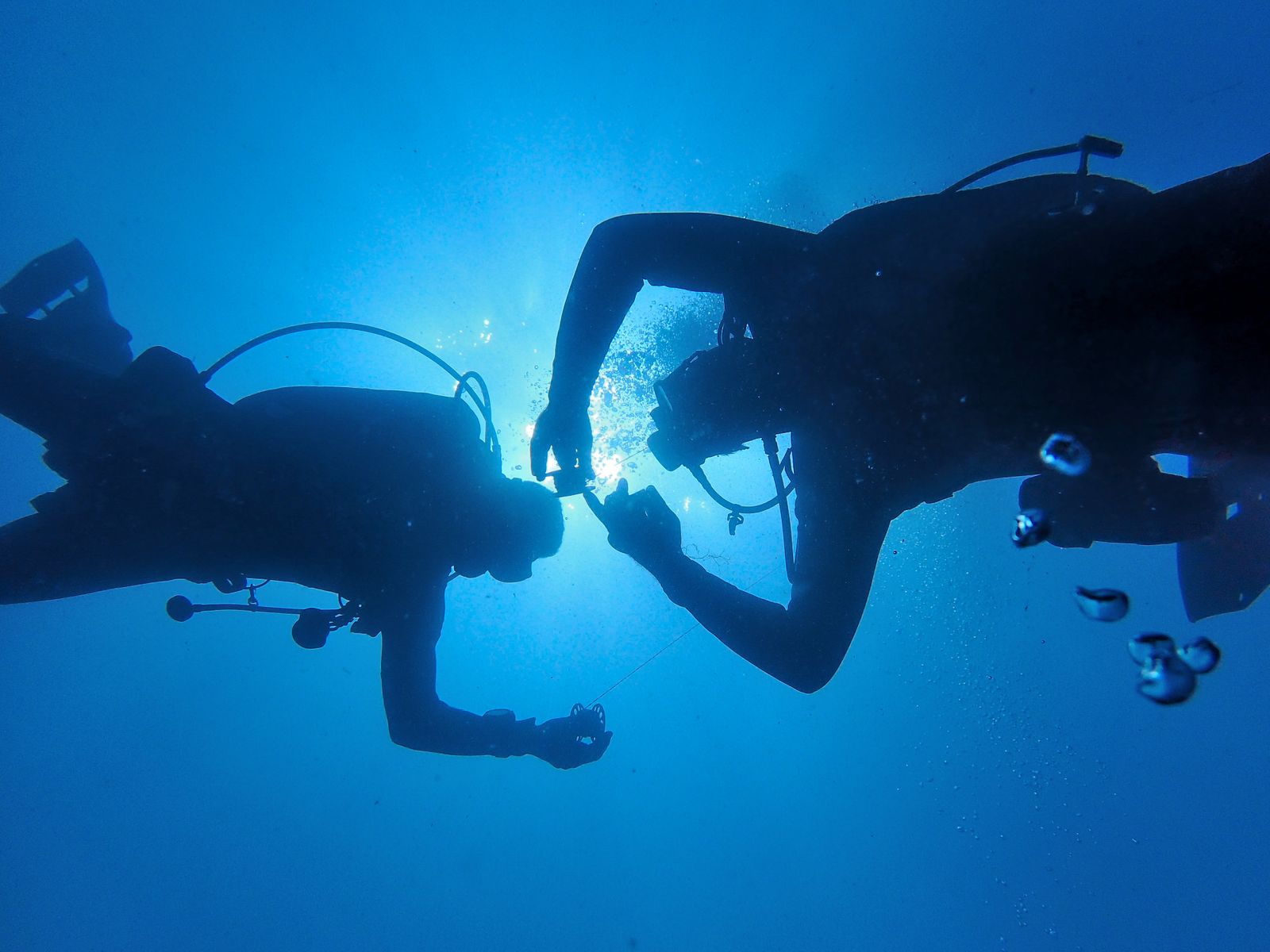
- ·All divers in dark wetsuits, dark fins, dark hoods. White and yellow gear is not permitted.
- ·No flash photography. No dangling gauges, streamers or surface lights.
02
In the Water
- ·Maximum 4:1 guest-to-guide ratio on Tiger Zoo dives.
- ·Dedicated shark safety divers behind the guest line.
- ·Hands kept close to the body. No reaching, no touching, ever.
- ·Streamlined, neutral buoyancy. Steady breathing. Eye contact with approaching animals.
03
On the Boat
- ·DAN-standard emergency oxygen on every departure.
- ·AED, trauma kit, two-way radio, satellite communicator, surface marker buoys.
- ·Trained first responder on every boat, every dive.
- ·Standard 24-hour no-fly window observed before all domestic departures.
“We do not market our safety record as a guarantee. We treat it as the standard we are responsible for upholding on every single dive we run.”
— 02 / Conservation
A living shark is worth more.
01
The Maldives as Sanctuary
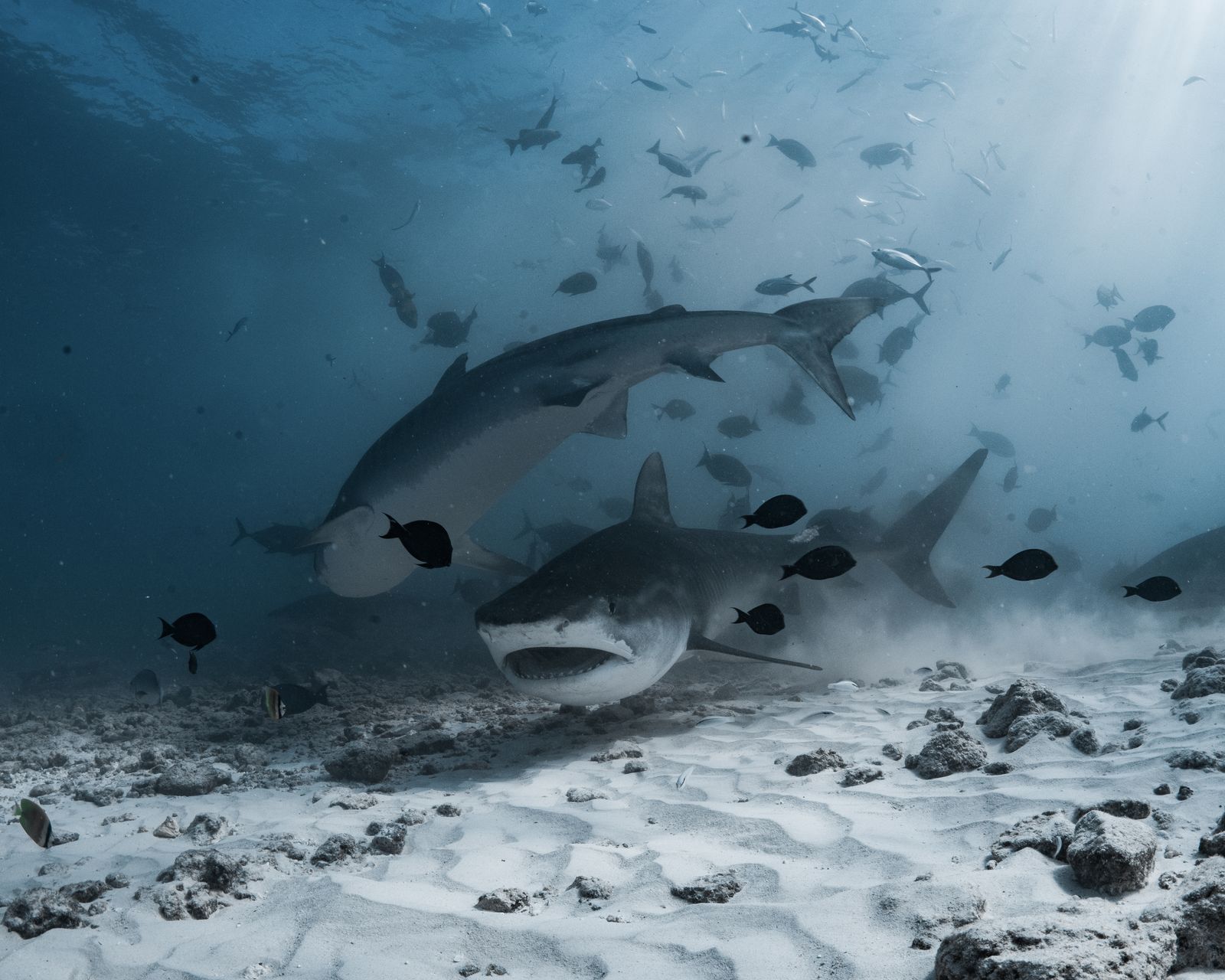
The Maldives banned commercial shark fishing across its 900,000 km² Exclusive Economic Zone in March 2010, becoming only the second nation in the world to do so after Palau. Diving tourism alone generates the majority of the value the country draws from its shark population.
02
Operating Principles
No-touch policy, absolute. No conditioning of animals to associate divers with food. No feeding for spectacle. No flash, no strobes on shark dives. Strict group-size limits regardless of demand.
03
Research Support
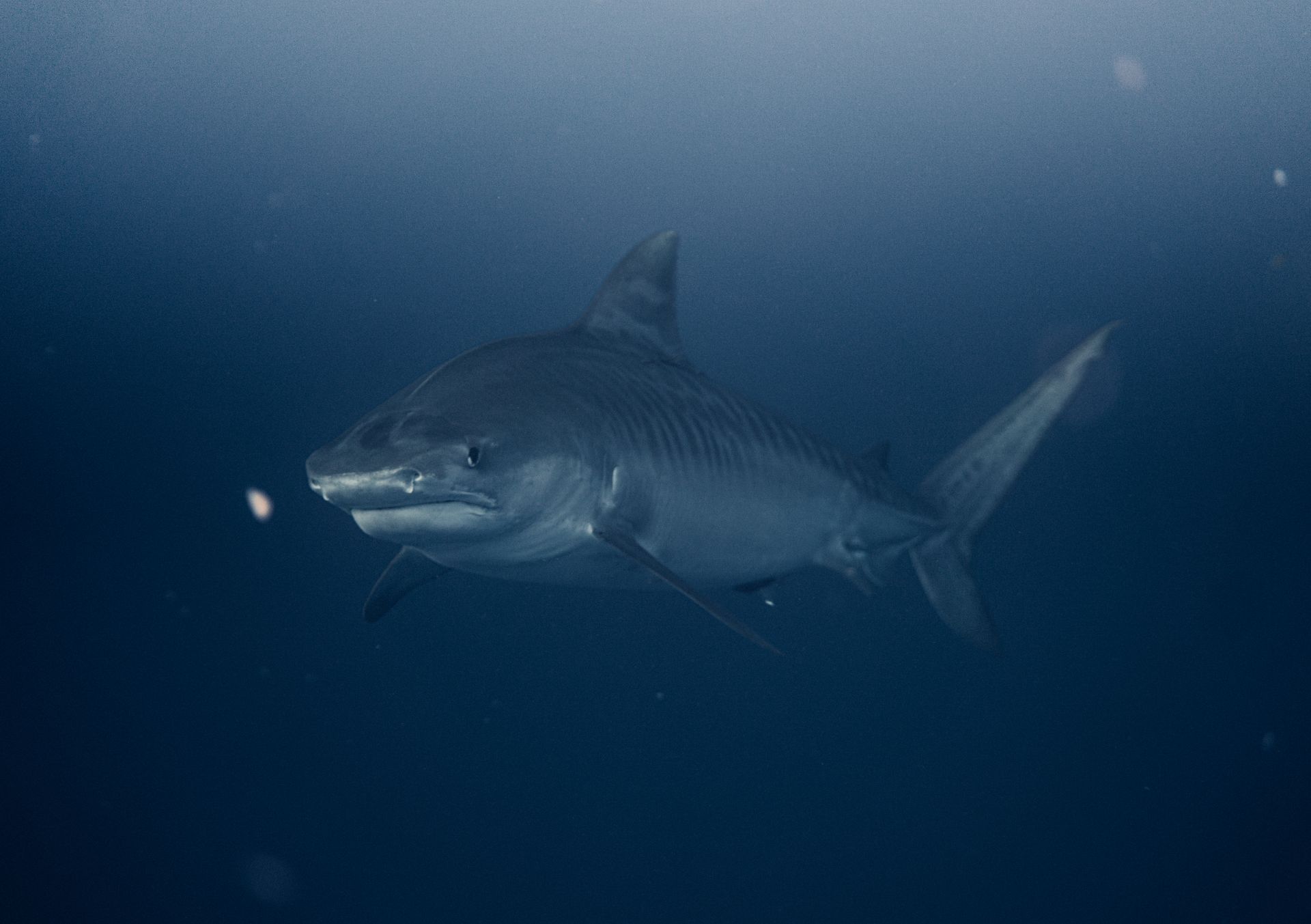
We collaborate with the Miyaru Programme on the long-running tiger shark photo-ID project that has identified over 300 individual tigers around the island. Our guides are trained in non-invasive citizen-science methods.
04
Island Practice
Quarterly Thoondu Beach and harbour cleanups. Reef-friendly sunscreen as house standard. Single-use plastic eliminated across our boats. Contribution to Fuvahmulah Nature Park wetland preservation.